
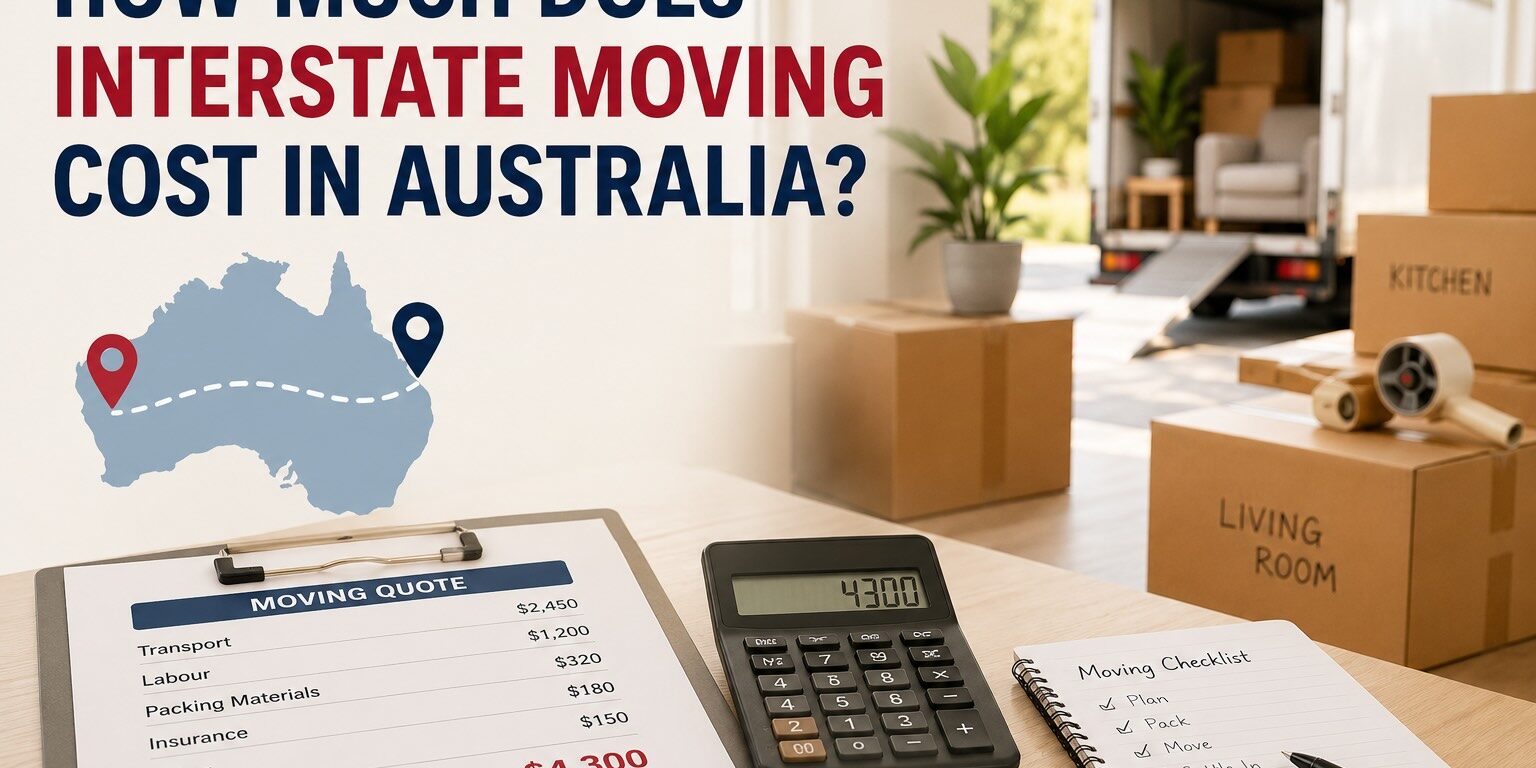
How Much Does Interstate Moving Cost in Australia?
Key highlights
This guide explains how much interstate moving costs in Australia for Australian families and individuals planning to move interstate, using Sydney Moving’s practical quoting perspective: most professional interstate moving costs sit around AU$2,500 to AU$8,000, with a three bedroom house averaging AU$2,600 to AU$5,850.
- The cost to move interstate depends mainly on cubic metres, route distance, service level, access, timing and insurance coverage.
- Additional costs can include packing materials, transit insurance, storage facilities, utilities, pet transportation, travel and temporary accommodation.
- Backloading, self packing, decluttering and off peak seasons can reduce moving costs.
- For a better idea of total cost, ask Sydney Moving for an itemised quote and allow a contingency for hidden fees.
Interstate Moving Costs Explained
Interstate moving in Australia typically costs between AU$2,600 and AU$5,850 for a three bedroom house, although the estimated cost of professional interstate moving in Australia generally ranges between AU$2,500 and AU$8,000. Smaller moves can sit closer to AU$1,000 to AU$3,500, while larger homes, long-distance routes and full-service moves can reach AU$10,000 or more.
This guide covers the main parts of interstate moving costs, including removalist fees, moving insurance, packing services, packing materials, storage options, pet transportation, utility connections, travel, temporary accommodation and other costs that can affect your moving budget. It is written for Australian families, couples, renters, homeowners and individuals planning an interstate move from or to New South Wales, South Australia, Western Australia or another state.
The short answer is that the cost to move interstate depends on the volume of your personal belongings, the distance to your new location, the type of service you choose and the time of year. Removalists calculate price primarily on the volume of belongings in cubic metres, then adjust for route, labour, access, timing and additional services.
By the end, you should have a better idea of:
- The average cost of interstate moving for different home sizes
- The key factors that change the final price
- How to estimate your total cost beyond the removalist quote
- Where hidden fees and additional fees often appear
- Practical ways of saving money without making the moving process harder than it needs to be
Understanding Interstate Moving Costs
Interstate moving costs are the combined expenses involved in relocating your belongings from one Australian state or territory to another. That includes the moving truck, professional movers, fuel, route planning, loading, transport, unloading, basic handling equipment and any additional services you choose.
Interstate moving usually costs more than a local move because distance adds fuel, tolls, transit time, labour hours and planning. Longer routes in interstate moving require higher costs due to fuel, transit times, tolls and labour. A move from Sydney to Melbourne is very different from a move from Sydney to Perth, even if the same amount of furniture is being moved.
Moving costs can vary widely depending on the distance between states, with estimates ranging from AU$1,000 to AU$10,000 for different routes and home sizes. That is why a rough estimate is useful at the start, but a detailed inventory is needed before you rely on any number.
Primary Cost Components
Removalist fees are usually the largest part of the cost of moving interstate. A professional removalist company will usually calculate the estimated cost based on cubic metres, the route, the number of movers required, the size of the moving truck and the service level you choose.
Volume matters because every item takes space. A compact one bedroom house or apartment may need far fewer cubic metres than an average home with outdoor furniture, garage contents, appliances, wardrobes and bulky lounge furniture. A three bedroom house often falls into a mid-range category, but the actual cost to move can change quickly if there are sheds, storage cages, pool tables, gym equipment or high value fragile items.
Service level also matters. A basic service may focus on transport, loading and unloading. A fuller service may include packing services, furniture wrapping, dismantling, reassembly, unpacking, moving supplies and extra care for fragile items. The more labour and time required, the higher the total cost.
Secondary Cost Factors
Secondary cost factors are the expenses that sit around the main removalist quote. They can include moving insurance, transit insurance, packing supplies, bubble wrap, packing tape, storage facilities, utility reconnections, pet transportation, rubbish removal, car transport, flights and temporary accommodation.
Reconnecting utilities when moving interstate can cost between AU$100 and AU$500, depending on the number of utilities and the providers involved. Storage costs for belongings during an interstate move can range from AU$150 to AU$500 per month, depending on the volume of items and the storage facility. The cost of packing materials for a DIY move can start at around AU$100 and increase based on the volume and type of materials needed, such as boxes, tape and bubble wrap.
These secondary costs may look small compared with the removalist fee, but they affect the overall moving budget. A typical recommendation is to add a 40% buffer to the primary removalist quote for hidden fees, other costs and personal circumstances that change during the move.
Complete Interstate Moving Cost Breakdown
Once you understand the main cost groups, it becomes easier to compare quotes and plan properly. The average interstate move is not one fixed price. It is a combination of labour, truck space, route distance, insurance options, packing choices and timing.
The table below gives a practical guide to common cost ranges. Your Sydney Moving quote may differ depending on your inventory, access and new address.
| Cost area | Typical range | What changes the price |
|---|---|---|
| Removalist services | AU$2,500 to AU$8,000 for many professional interstate moves | Home size, cubic metres, distance, access and service level |
| Three bedroom house | AU$2,600 to AU$5,850 on average | Amount of furniture, route and packing choice |
| Moving insurance | AU$250 to AU$1,000 in many cases | Declared value, insurance coverage and policy type |
| DIY packing materials | From around AU$100 and upwards | Boxes, packing tape, bubble wrap and other packing supplies |
| Storage facilities | AU$150 to AU$500 per month | Volume, storage location and storage time |
| Utility connections | AU$100 to AU$500 | Number of services and provider fees |
| Travel and accommodation | AU$1,000 to AU$5,000 | Family size, distance, flights, fuel and temporary accommodation |
| Pet transportation | AU$100 to AU$500 | Mode of transport, distance and pet needs |
Removalist Services
Removalist services are the core of most interstate moving costs. As a broad guide, a one bedroom move can cost around AU$2,000 to AU$3,500, a three bedroom house can average AU$2,600 to AU$5,850, and a larger four bedroom house or bigger household can cost around AU$4,000 to AU$8,000 or more. For some routes and home sizes, moving costs can sit anywhere from AU$1,000 to AU$10,000.
Sydney Moving bases interstate moving quotes on the above factors, including the volume of goods, the distance to the destination, the type of service selected and the time of year. Factors influencing interstate moving costs include the total volume of goods, distance to the destination, type of service selected and time of year, with peak periods generally being more expensive.
A basic package may suit people who are comfortable with self packing and only need loading, transport and unloading. A full-service move may suit people who want professional movers to handle packing services, furniture protection, dismantling and reassembly. Full-service interstate removalists cost more, but they can reduce the time and physical effort involved.
Specialty items can add extra cost. Transporting specialty items like pianos or vehicles requires specialised handling equipment. Pool tables, antiques, oversized mirrors, marble tables and high value artwork may also need added protection, extra labour or a different loading plan.
Moving Insurance
Moving insurance matters because interstate routes involve longer handling time, more road exposure and more variables. Most interstate removalists do not cover damage to items during transit if the damage is due to no fault of their own, such as traffic accidents or water damage from rain. That surprises many people, so it is worth asking questions before moving day.
Moving insurance can be obtained through contents insurance policies, authorised removalists or standalone insurance providers, and it typically covers loss or damage to goods during the moving process. Some people already have contents insurance that can be extended for a move. Others add insurance through their removalist or choose standalone insurance for high value belongings.
Goods in Transit insurance is commonly provided by reputable interstate removalists, but it may only cover specific objects in certain situations, so it is important to understand the coverage before making a choice. Ask whether Sydney Moving can provide transit insurance, what is included, what is excluded and whether you need full replacement coverage for certain items.
Before you add insurance, read the product disclosure statement and check the excess, claim limits and exclusions. Transit insurance and public liability insurance are not the same thing. Public liability insurance usually relates to injury or property damage connected with the work being performed, while moving insurance relates to your personal belongings.
Additional Services and Expenses
Packing materials can cost AU$50 to AU$600 depending on home size, but for a DIY move the cost of packing materials can start at around AU$100 and rise based on the number of boxes, packing tape, bubble wrap and other packing supplies required. Fragile kitchens, books, wardrobes and garage items can use more moving supplies than expected.
Storage can cost AU$150 to AU$500 per month if your new address is not ready, your settlement dates do not line up or you need time before unpacking. Storage options vary by location, access and the size of the unit or container. Ask whether short-term storage facilities are available if there is a gap between pickup and delivery.
Travel for your household can be a major extra cost. Flights, fuel, meals, accommodation and time off work can add up quickly, especially for families. Travel costs can range from AU$1,000 to AU$5,000 for flights or accommodation during the move, depending on distance, personal circumstances and whether you drive or fly.
Pet transportation needs its own line in your moving budget. The cost of moving a pet interstate can range from AU$100 to AU$500, depending on the mode of transportation and distance. Transporting pets by air can incur costs of several hundred dollars, depending on the flight and distance involved in the move. When moving pets interstate, it is important to ensure they are vet-cleared and comfortable, which can add to the overall moving budget.
Other costs may include rubbish removal, cleaning, utility connections, address changes, vehicle registration changes, school enrolments and short-term accommodation. These are not always part of the removalist quote, but they still affect how much it costs to move.
Factors That Affect Your Moving Costs
The above factors explain why two households moving between the same cities can receive different quotes. One family may have a small inventory, easy driveway access and flexible timing. Another may have stairs, a large inventory, specialty items, storage needs and a fixed school holiday deadline.
The key factors are distance and route, volume and weight, timing and seasonality, access, insurance options and additional services. If you want a better deal, focus first on the factors you can control, especially volume, packing and timing.
Distance and Route
Distance is one of the clearest cost drivers. Cost per kilometre rises because longer routes use more fuel, more driver time, more planning and sometimes more tolls or overnight logistics. Longer routes in interstate moving require higher costs due to fuel, transit times, tolls and labour.
Popular routes such as Sydney to Melbourne or Sydney to Brisbane can be more predictable because trucks travel them more often. A move from New South Wales to South Australia may price differently from a move to Western Australia because distance and transit time change significantly. Remote and regional destinations can also cost more because access is harder and trips may be less frequent.
Sydney Moving calculates distance-based pricing by looking at the pickup address, the delivery address, the route, the truck space required and the service level. If the new location is outside a major metro area, include that detail early so the estimated cost is more accurate.
Volume and Weight
Most professional removalists price interstate moving by volume in cubic metres rather than by counting items only. Removalists calculate price primarily on the volume of belongings in cubic metres because space on the truck is limited and each cubic metre affects fuel, loading time and route planning.
Furniture type changes the calculation. A lightweight but bulky lounge may take more truck space than several smaller boxes. Outdoor settings, wardrobes, bed frames, appliances, garage shelves and low-value bulky furniture can increase the cost of moving even when the items are not expensive.
Decluttering before your move can significantly reduce costs, as the more items you have, the higher the moving expenses will be. Removing unwanted items before the quote is finalised can lower the total cost and make packing easier. A garage sale, donation run or rubbish removal booking can be worthwhile if it cuts bulky items from the load.
Timing and Seasonality
Timing and demand can significantly affect moving costs, with peak seasons running from November to February. Peak season costs are often higher during November to January, school holidays, weekends and the end of the month. In busy periods, you may pay a 15% to 30% premium because trucks and crews are in higher demand.
Booking your move during off-peak times, such as mid-week or mid-month, can result in savings of 15% to 30% compared to peak season rates. February to October weekdays are often easier to price well, especially if you have some flexibility around pickup or delivery.
Notice also matters. Booking 4 to 6 weeks in advance gives Sydney Moving more room to plan the moving truck, crew and route. Late bookings can still be possible, but availability may be tighter and the best prices may already be gone.
Access and Special Requirements
Access can change labour time. Stairs, lifts, steep driveways, long carries from the truck to the front door and limited parking can all create additional fees. If a truck cannot park close to the property, movers may need more time, more equipment or a shuttle plan.
Special requirements also affect price. Fragile items, pool tables, pianos, vehicles, antiques and high value goods may need specialised handling equipment or extra insurance coverage. If these items are not declared before moving day, the quote may not reflect the true work involved.
Rural properties and difficult access locations can add extra cost as well. Narrow roads, restricted loading zones and long distances from the nearest main route all affect planning. Share access details, photos and inventory notes early so Sydney Moving can quote more accurately.
How to Reduce Interstate Moving Costs
There are several ways to lower interstate moving costs without turning the whole move into a DIY move. The best approach is to reduce volume, choose timing carefully, compare the details of the quote and decide which services you really need.
Saving money is easier when you start early. Last-minute decisions often create extra cost because there is less time to sell items, source packing supplies or book an off-peak date.
Declutter Before Moving
Decluttering before your move can significantly reduce costs, as the more items you have, the higher the moving expenses will be. Since most interstate removalists price by cubic metres, every bulky item you remove can reduce the space needed on the moving truck.
Focus on high-volume, low-value items first. Old furniture, spare mattresses, broken outdoor pieces, unused appliances and garage clutter can cost more to move than they are worth. Sell, donate, dispose of or book rubbish removal before the final inventory is prepared.
A garage sale can help reduce unwanted items and put a little money back into your moving budget. It also makes packing faster because there are fewer personal belongings to sort, label and load.
Consider Backloading Options
Backloading is a cost-effective moving option that allows you to share space on a truck with other customers, potentially saving you 10% to 30% on your moving costs. On some routes and schedules, backloading can save 20% to 40%, especially where the truck is already travelling in your direction.
The trade-off is timing. Backloading works best when you can be flexible with pickup or delivery dates. Transit times may be longer because the truck may be carrying goods for other customers along the route.
Ask Sydney Moving whether a backloading option is available for your route. It can be the cheapest way to move interstate for smaller loads, partial homes or people who do not need guaranteed same-week delivery.
Pack Yourself
Packing your belongings yourself instead of hiring professional packers can lead to significant savings on your moving costs. Self packing can save around AU$300 to AU$800 in labour costs depending on the size of the home and how much packing would otherwise be required.
You can reduce costs further by sourcing boxes from liquor stores, grocery stores or friends who have recently moved. Still, use proper packing materials for fragile goods. Cheap boxes that collapse can create damage, delay and extra stress.
At a minimum, budget for packing supplies such as boxes, packing tape, bubble wrap, marker pens, mattress protectors and other packing supplies. If you are moving high value items, consider asking Sydney Moving which items should be packed by professional movers for insurance reasons.
Time Your Move Strategically
Avoiding peak periods can make a real difference. Booking your move during off-peak times, such as mid-week or mid-month, can result in savings of 15% to 30% compared to peak season rates. Weekends, school holidays and the November to February period are usually harder to book cheaply.
If possible, book 4 to 6 weeks in advance. This gives you more choice of dates, more time to organise packing materials and a better chance of finding a cost effective solution such as backloading.
Mid-week moves can often cost 10% to 20% less than weekend moves, depending on demand and route availability. If your lease, settlement or work start date allows flexibility, timing can be one of the simplest ways to reduce the total cost.
Planning Your Interstate Move Budget
A practical moving budget should include more than the main removalist quote. Start with the estimated cost from Sydney Moving, then add insurance options, packing materials, utilities, storage, travel, pet transportation, cleaning, rubbish removal and temporary accommodation if needed.
Use these steps to plan:
- Prepare a detailed inventory of furniture, boxes, appliances, outdoor items and garage contents.
- Ask Sydney Moving for an itemised quote showing volume, route, service level, insurance options and any likely additional fees.
- Decide whether you want self packing, partial packing services or full packing.
- Check whether transit insurance, contents insurance or standalone insurance gives the right insurance coverage.
- Add a 40% buffer to the primary removalist quote for hidden fees, other costs and changes in personal circumstances.
- Book early, preferably 4 to 6 weeks ahead, especially if moving near school holidays or peak season.
The extra planning matters because hidden fees often come from details that were missed at quote stage. Stairs, long carries, storage delays, last-minute packing, specialty items and parking restrictions can all add extra cost.
Also plan for life admin at the new address. Changing address, school enrolments, vehicle registration, utility transfers and pet arrangements are easy to overlook while focusing on the moving truck. They may not all be large expenses, but together they affect the final moving budget.
Interstate Moving Cost FAQ
What’s the cheapest way to move interstate?
The cheapest way to move interstate is usually a mix of backloading, self packing, decluttering and moving outside peak periods. Backloading is a cost-effective moving option that allows you to share space on a truck with other customers, potentially saving you 10% to 30% on your moving costs.
How far in advance should I book to get the best price?
Book at least 4 to 6 weeks in advance where possible. This gives Sydney Moving more availability and improves your chance of booking off peak seasons, mid-week dates or a backloading space.
Are there hidden fees I should watch for?
Yes. Hidden fees can come from stairs, lifts, long carries, poor parking, storage delays, last-minute packing, heavy items, pool tables, pianos, access problems and undeclared inventory. A typical recommendation is to add a 40% buffer to the primary removalist quote for hidden fees.
What’s included in a standard removalist quote?
A standard quote usually includes labour, the moving truck, loading, transport, unloading and basic handling. It may also include basic transit insurance, but you should ask exactly what Sydney Moving includes and whether you need to add insurance for wider protection.
How do I get an accurate cost estimate?
Give Sydney Moving a detailed inventory, pickup and delivery addresses, access notes, photos where useful, preferred dates and a list of special items. The more accurate the cubic metre estimate, the better idea you will have of the total cost.
Can I get government assistance for interstate moving?
Some people may be eligible for relocation grants or support when moving for work, study or specific personal circumstances. Check current government programmes, employer relocation policies and tax advice before assuming assistance applies.
What if my moving date changes?
Fees and availability depend on how much notice you give and how busy the route is. Changes during school holidays, weekends or peak season may be harder to accommodate and may create additional costs.
How much should I budget beyond removalist costs?
Many households should budget an additional 30% to 50% beyond the main removalist quote for other costs such as moving insurance, packing materials, utility connections, pet transportation, storage facilities, travel and temporary accommodation. For higher risk moves, the 40% buffer is a sensible starting point.